Outdoor & Patio Tile for Connecticut: What Holds Up Through Freeze-Thaw
Outdoor tile in Connecticut has a tougher job than tile inside your home. It has to deal with rain, snow, standing water, direct sun, and repeated freezing and thawing — while still giving people a safe surface to walk on.
That does not mean every patio needs the same material or every outdoor project needs to be torn out and rebuilt. It does mean the decisions under and around the tile matter as much as the tile you see. If you are planning a patio, pool deck, front entry, or outdoor kitchen, here is what to think through before choosing a surface.
Why Connecticut weather is hard on outdoor tile
Tile is durable, but water and movement are unforgiving. When water gets below a tile surface and temperatures drop, it can expand. Over enough freeze-thaw cycles, a surface that was not designed to drain and move correctly can develop loose tile, cracked grout, or failed edges.
The problem is not simply cold weather. It is the combination of moisture, temperature changes, and a surface that cannot shed water. That is why an outdoor tile project starts with the whole assembly: the substrate, waterproofing or drainage approach where appropriate, tile selection, setting materials, movement joints, and finished edges.
Start with the right tile for the location
An outdoor surface needs to fit the actual use of the space. A sheltered porch, an exposed patio, and a pool deck all face different amounts of water and traffic.
Porcelain is often a practical choice for Connecticut outdoor work because it is dense, available in many styles, and can be selected in products rated for exterior use. Natural stone can also be beautiful outdoors, but it needs a material-appropriate plan for sealing, maintenance, and traction. The right answer depends on the product, the install location, and the details around it — not on a label alone.
Before buying, ask these questions:
- Is this specific tile rated by its manufacturer for exterior use in a freeze-thaw climate?
- What does the surface feel like when wet?
- Is the tile appropriate for the amount of foot traffic it will receive?
- How will the finished surface handle water instead of trapping it?
- What trim, edge, or transition detail protects the perimeter?
Those questions are more useful than choosing solely by color or a showroom sample.
Slip resistance matters most near water
Outdoor tile has to be comfortable to live with, not just good-looking in a photo. A polished or highly smooth surface can become a poor choice where rain, pool water, or wet shoes are normal.
For pool decks, entries, and patio paths, look for a surface with texture and an exterior-appropriate slip-resistance rating. That does not mean the roughest finish is always best; an aggressively textured surface can be hard to clean. It means matching the surface to the conditions people will actually experience.
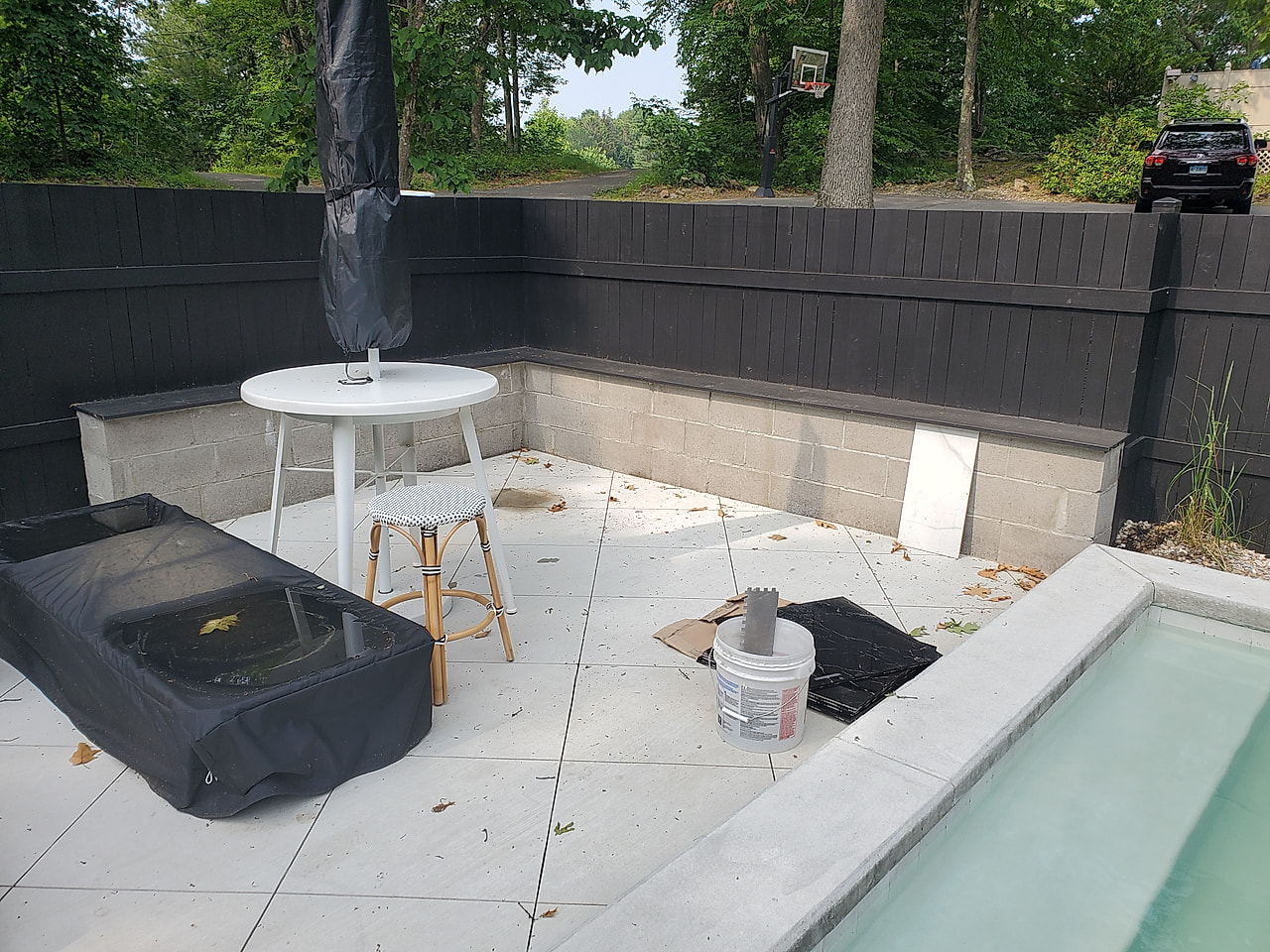
RK's Southbury pool-deck project used large-format porcelain selected for freeze-thaw conditions with a slip-resistant surface. The project also required a drainage slope and a finished edge around the pool perimeter. That is the kind of full-system thinking an outdoor project needs — material, water management, and the final detail all working together.
Drainage is not an afterthought
Water needs a clear path off an outdoor tiled surface. If a patio is flat in the wrong direction, water can pool at doors, against walls, or in low spots where it works its way into the installation.
The slope should be planned before tile goes down, not improvised with grout at the end. Existing concrete, thresholds, drains, landscape grading, and the height of the finished tile all affect what is possible. Some spaces need surface preparation before any tile is set; others need a different material or a different layout to make the water path work.
If you see persistent puddling on an existing patio, it is worth diagnosing before covering the surface. New tile will not solve a drainage issue underneath it.
Do not skip movement and edge details
Outdoor materials expand and contract. A good installation gives the assembly room to move where it needs to, especially at perimeters, transitions, and larger surface areas. The exact approach depends on the tile system and the site, but the principle is simple: hard materials need planned relief instead of being locked together until something cracks.
Edges deserve the same attention. A finished edge around stairs, a pool perimeter, or a raised patio is exposed to impact and weather. It should look intentional and protect the installation, not feel like the leftover edge of a floor.
When an outdoor tile project is a good fit
Outdoor tile can be a strong fit when the base is sound, drainage can be handled correctly, and the selected tile is made for the conditions. It is especially useful when you want a more finished look than plain concrete or a surface that ties an outdoor area to the materials inside the home.
It may not be the right first move if the existing slab is badly moving, water is draining toward the house, or the space will receive more moisture than the planned finish can manage. A straight answer before materials are ordered is less expensive than trying to correct a bad fit after the fact.
Planning your Connecticut patio or pool deck
Before requesting an estimate, take a few photos and note where water goes after a heavy rain. Include any cracks, steps, doors, drains, or pool edges near the project area. Those details help show whether the job is primarily a tile install or whether preparation and drainage need to be part of the plan.
For a closer look at outdoor work, see RK's Connecticut pool deck project or review the outdoor and patio tile service. Ready to talk through your space? Contact RK Tile & Stone for a straightforward assessment.