Kitchen Backsplash Installation in Connecticut: What to Expect
A backsplash is the smallest tile job in most kitchens and the one people look at the most. It sits at eye level, right behind the sink and the range, and it either pulls the whole kitchen together or it doesn't. If you're weighing kitchen backsplash installation this season, here's a straight look at what the work actually involves, what moves the price up or down, and what happens once the crew shows up — from a contractor who does this work in Waterbury and across the state every week.
What a backsplash installation actually involves
From the outside it looks like sticking tile to a wall. The work that decides whether it looks good in five years happens before and around that:
- Prep — removing an old backsplash if there is one, patching and sanding the drywall, making sure the surface is flat and clean. Tile telegraphs a wavy wall.
- Layout — finding the true center, deciding where the cut tiles land, and planning around the range hood, the window, and the outlets. This is the step that separates a professional job from a weekend one.
- Setting — troweling thin-set and setting tile with consistent spacing, keeping every course level even when the counter or cabinets aren't.
- Cuts — outlets, switches, corners, and the ends of runs. Clean, tight cuts around electrical boxes are the detail people notice without knowing why.
- Grout and caulk — grouting the field, then a flexible caulk (not grout) in the corners and along the countertop seam where movement happens.
Skip the layout planning and you end up with a sliver of tile in the most visible spot on the wall. That's the mistake we get called to fix.
What drives the price up or down
Backsplash pricing depends on the specific wall, so we won't put a number on it here that doesn't fit your kitchen — but four things move it more than anything else:
- Tile size and pattern. Small mosaics and herringbone take far more cuts and layout time than a running-bond subway. Large-format tile covers ground fast but is less forgiving on a wavy wall.
- Material. Natural stone and glass cost more to buy, cut slower, and are easier to ruin. Glass in particular needs the right blade and the right thin-set behind it.
- Wall condition. A flat, clean wall is quick. Removing an old tile backsplash, patching torn drywall, or dealing with an out-of-square cabinet run adds prep hours.
- Obstacles. Outlets, switches, a window sill, an over-range hood, and an end wall that needs a finished edge all add cuts. A kitchen with eight outlets is not the same job as one with two.
You can see how we structure a quote on the pricing page — every estimate is free and done on-site, because the wall itself is what sets the number.
What one real backsplash actually looked like
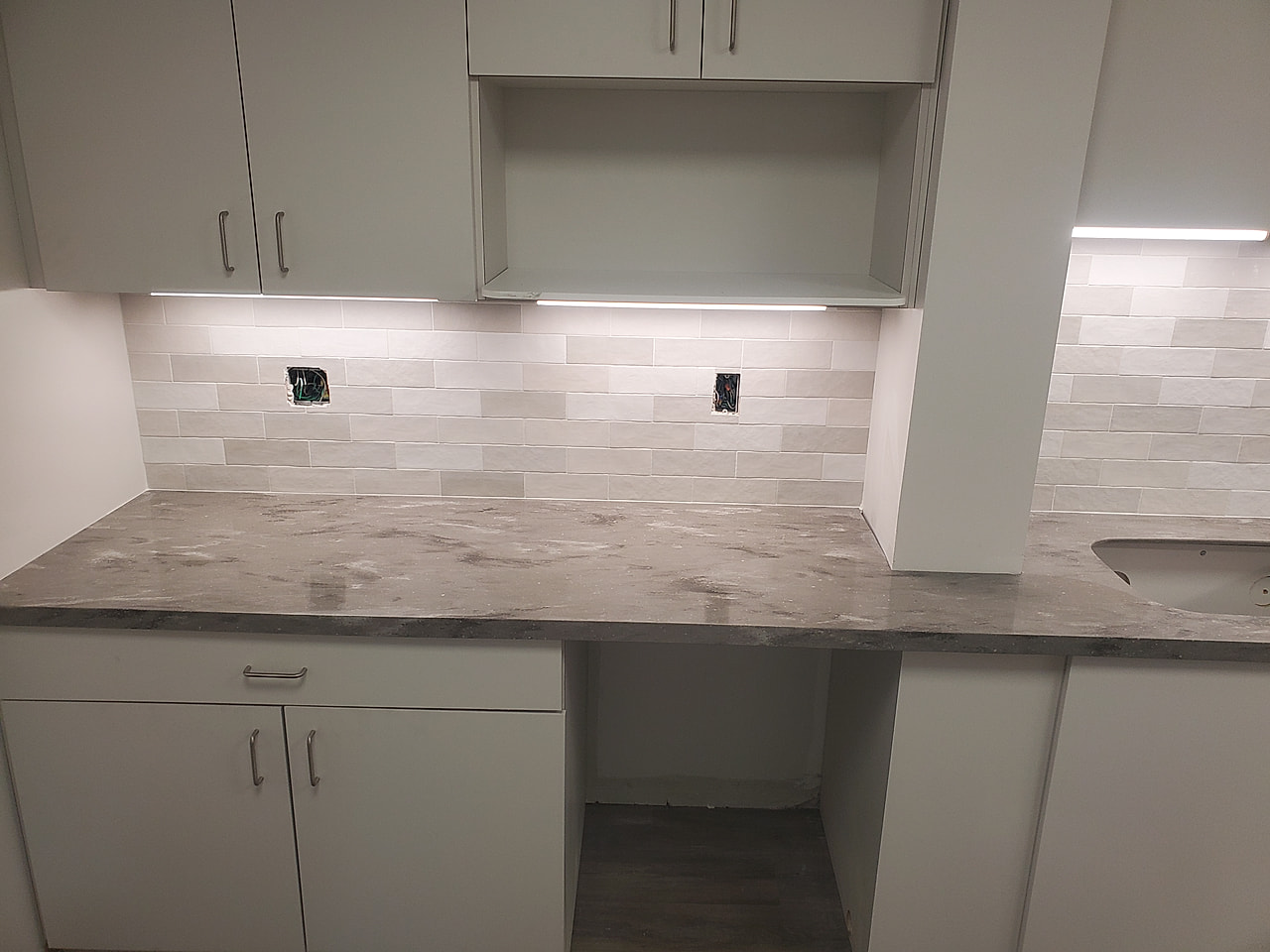
A recent butler pantry backsplash in Waterbury went from bare drywall to a finished light-gray subway surface over marble-look quartz in one day — tight grout lines, level brick offset, custom-cut around two electrical outlets. That's what's possible when the wall is ready and the layout is planned before the first tile goes up. A bigger wall, an intricate pattern, or a drywall repair first would change that timeline — every kitchen is its own job, which is exactly why we walk the space before giving you a schedule.
Choosing material and layout
A few things worth knowing before you fall in love with a photo:
- Subway tile is popular for a reason. It's affordable, it cuts cleanly, and a 1/2 or 1/3 brick offset reads classic without trying. See it across a full kitchen in this farmhouse subway kitchen.
- Grout color changes everything. A matching grout makes the wall read as one surface; a contrasting grout makes the pattern the star. Same tile, completely different kitchen.
- Go to the ceiling behind the range, or stop at the cabinets — but decide on purpose. A full-height feature behind the range is one of the highest-impact upgrades in most backsplash jobs.
- Bring a sample home. Kitchen lighting is unforgiving and nothing looks the same in a showroom as it does under your own under-cabinet lights.
The full range of what we install — subway and stacked tile, natural stone, mosaic and glass patterns, full-wall backsplashes, and custom layouts — is on the kitchen backsplash service page.
What to expect on install day
- We protect the space first. Countertops, cabinet fronts, and floors get covered before anything else happens.
- We confirm the layout with you. Where the cuts fall and where the pattern centers gets agreed on before tile goes on the wall, not after.
- Power gets handled safely. Outlet and switch covers come off; the boxes may need spacers so the covers sit flush on the new tile surface.
- The site gets cleaned daily. Tile work makes dust. It shouldn't still be there when we leave.
- We walk it with you at the end. Anything that isn't right gets fixed before the job is called done.
Common questions
Can I install a backsplash over existing tile?
Sometimes, but it's rarely the right call. It adds thickness that fights your outlets and countertop edge, and it's only as sound as the tile underneath. Removing the old backsplash first is usually cleaner and not much more work.
Do I need to be home during the install?
For the layout conversation at the start and the walkthrough at the end, ideally yes. In between, no — most of the day is quiet, careful work.
How soon can I use the kitchen?
The kitchen stays usable most of the day; the counter directly under the work is the part that's out of play. Grout needs a short cure before heavy scrubbing, but normal use resumes right away.
Should the backsplash go behind the range hood?
If the budget allows, yes. That wall is the focal point of the kitchen, and stopping the tile at the cabinet line there is the most common regret we hear.
The bottom line
- Backsplash cost and timeline vary too much from kitchen to kitchen to give a one-size number — tile choice, pattern, and wall condition all move it.
- A ready wall and a planned layout make a real difference, as the one-day butler pantry job above shows — but every project gets its own schedule after we've seen the space.
- The layout planning before the first tile — not the tile itself — is what makes it look right.
- The only honest price and timeline come from measuring your actual wall.
Thinking about a backsplash before the holidays? Get a free estimate or call or text (203) 509-2987. RK Tile & Stone serves Waterbury and towns across Connecticut.